
Reading the docs is not studying
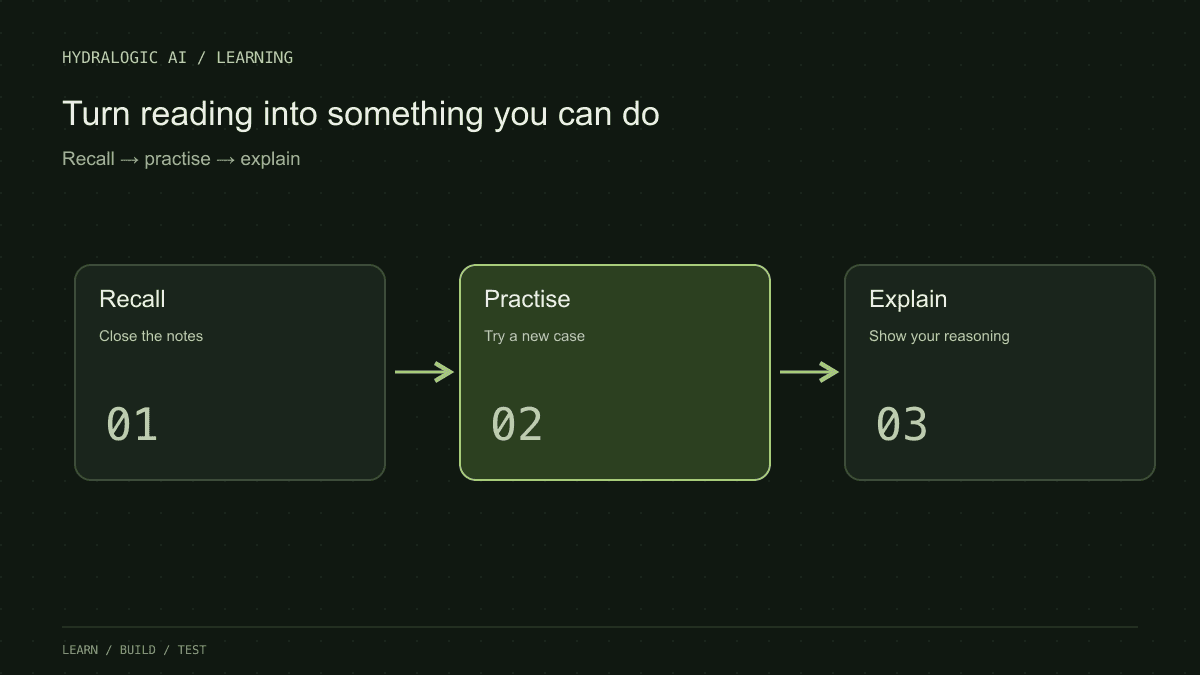
Beginner · Learning
“I read everything and still did not feel ready in the room.”
The most common thing candidates say about the Claude certification exams is some version of: I read the documentation, I felt prepared, and the questions were not asking what I had studied for.
We have not sat these exams yet — when we have, we will write that up honestly and this post will link to it. What follows is about study method, which does not require having sat it.
Why reading feels like enough and is not
Reading produces recognition. You see a page about tool use, it makes sense, and the sense it makes is real. Recognition is a genuine form of knowing, and it is not the one an exam measures.
These exams are proctored and closed-book, and they lean on scenario questions — a situation described, several plausible answers, one that fits. Plausible is the operative word. You cannot eliminate options you have never seen fail. If you have shipped a tool loop that misbehaved, one of those options is obviously wrong to you. If you have only read about tool loops, all four look fine.
That is the gap. It is not about study hours; it is about whether your knowledge has ever been contradicted by something running.
A cheaper order
Build one small thing end to end first. Before any structured study: a script that calls the API, defines a tool, handles the tool-use loop, and survives an error. A weekend of that is worth more than a week of reading, because it gives every later page something to attach to.
Then read, and read for the parts that surprise you. Anything that makes you go “wait, really?” is a candidate exam question. The parts that confirm what you already assumed are the parts you can skim.
Find out where you actually stand before you book. The exam is not free, and a failed attempt starts a waiting period before you can retake, which grows with each failure. That combination is what makes guessing expensive — the cost is the calendar as much as the fee.
Study the domains you avoid. Almost everyone over-studies the area they already enjoy. The efficient move is the reverse, and it is the one nobody wants to do.
The one-line version
These exams reward having been wrong about something in production. If nothing you have built has ever failed on you, that is the gap to close first — and it closes faster than reading does.
Written by Hydralogic AI, not yet reviewed by a second person. This post describes problems reported by others rather than ones we measured ourselves — the reasoning is ours, the numbers are theirs. Check them below.
A little practice. A clearer next step.
Twelve free questions with explanations. Choose your track. No account, no card.