
Your prompt cache expires faster than you think
Builder · Prompt Caching
“Same project, same prompts, and the bill went up for no reason I can see.”
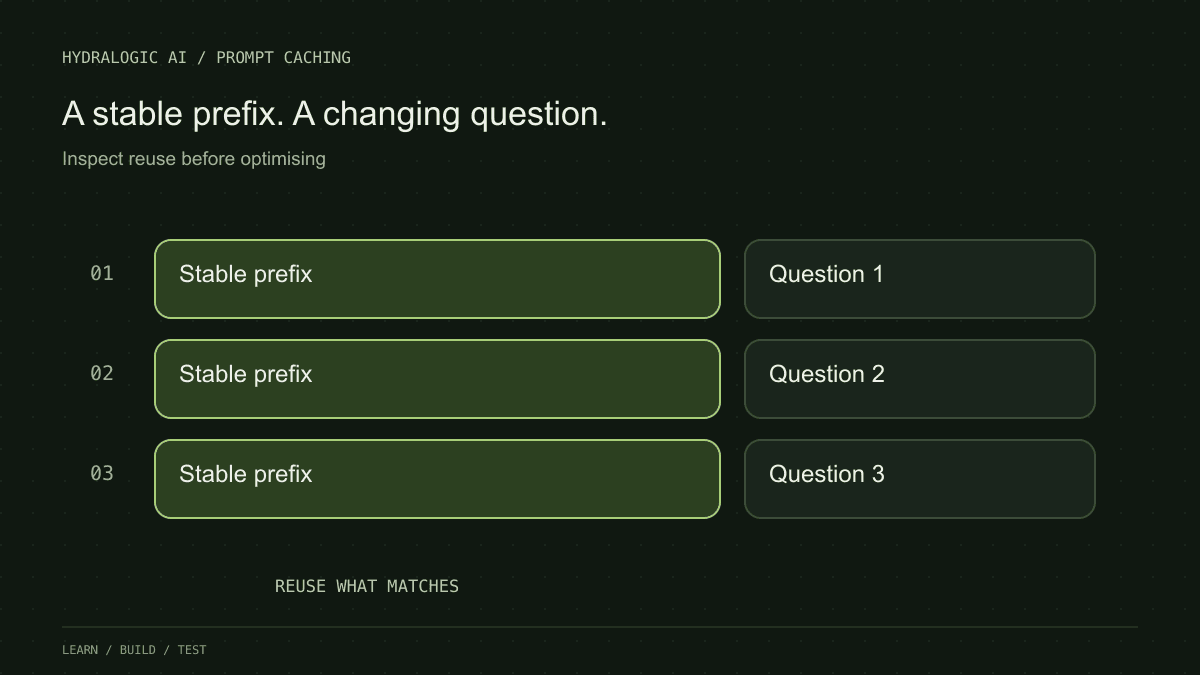
Prompt caching is the reason a long session is affordable. Your system prompt, your CLAUDE.md, the files you loaded — all of that gets cached, and subsequent turns read it back at a fraction of the price.
The part people miss: the cache has a lifetime, and it is short. Reports in early 2026 described a default dropping to minutes rather than an hour, with a double-digit percentage jump in cache-creation costs as a result. Whatever the current default on your plan, the shape of the problem is the same.
Why this shows up as a mystery
Cache expiry is invisible. Nothing tells you it happened. You take a call, come back, ask the next question — and that question silently pays full price to rebuild the entire prefix you thought you had already paid for.
Two habits make it worse, and both feel like good practice:
Thinking between prompts. The developer who reads the diff carefully before replying gets a worse deal than the one who fires back immediately. That is a genuinely perverse incentive and worth naming.
Editing the top of the context. Caching works on a stable prefix. Change something early — a system prompt, an early file — and everything after it is invalidated, even if the change was one line.
What to do
Work in bursts. Batch your questions and ask them close together. This is the whole fix, and it costs nothing.
Keep the stable things at the top and the volatile things at the bottom. Prefix order is not cosmetic — it decides what survives a change.
Do not reload files you already have. Re-reading a file mid-session both adds tokens and disturbs the prefix.
Read your own usage before optimising. The cache-creation line versus the cache-read line tells you whether this is your problem at all. Most cost advice on the internet is aimed at somebody else’s workload.
The one-line version
Caching rewards rhythm, not configuration. Long gaps and top-of-file edits are what cost you money, and neither is in a settings panel.
Written by Hydralogic AI, not yet reviewed by a second person. This post describes problems reported by others rather than ones we measured ourselves — the reasoning is ours, the numbers are theirs. Check them below.
A little practice. A clearer next step.
Twelve free questions with explanations. Choose your track. No account, no card.